

When UV rays hit your skin, they trigger changes that go beyond just tanning. These rays - categorized as UVA, UVB, and UVC - impact your skin in different ways:
- UVA rays penetrate deep, causing aging and quick tans.
- UVB rays damage the surface, leading to sunburns and long-lasting tans.
- UVC rays are blocked by the atmosphere and don’t reach you.
Tanning is your body’s defense against UV damage, but it’s also a sign of harm. Overexposure can lead to DNA damage, premature aging, and skin cancer. Even a “base tan” offers minimal protection (like SPF 3–4).
To tan safely:
- Use sunscreen (SPF 30+).
- Limit sun exposure, especially from 10 a.m. to 4 p.m.
- Wear protective clothing and sunglasses.
- Check your skin regularly for changes.
For even tans, tan-through swimwear like BetterTan’s MicroTan® fabric allows some UV exposure while drying quickly. However, sunscreen is still essential. Regular skin checks and smart sun habits can help you enjoy the sun while minimizing risks.
How UV Rays Damage Skin
How UV Rays Interact with Skin
When UV rays hit your skin, they set off a series of protective responses. UVB rays primarily affect the epidermis, the skin's outer layer, while UVA rays penetrate deeper into the dermis, leading to different impacts on the skin.
The Role of Melanin in Skin Protection
Melanin acts as your skin's built-in defense system by absorbing UV radiation and dispersing it as heat, which helps minimize DNA damage. When UV rays harm skin cells - especially keratinocytes - these cells release melanocyte-stimulating hormone (MSH). This hormone binds to melanocytes, triggering an increase in melanin production. The result? Tanning. The initial darkening, noticeable within hours, comes from redistributing existing melanin. Over the next few days, a deeper, longer-lasting tan develops as new melanin is produced.
Interestingly, MC1R signaling not only ramps up melanin production but also improves the skin's ability to repair DNA and resist oxidative stress. Genetics play a big role here. People with certain MC1R gene mutations - often those with fair skin and red hair - produce less melanin. This makes them less able to tan and more prone to UV damage and skin cancer.
Short-Term vs. Long-Term Effects of UV Exposure
Short-term effects of UV exposure show up quickly, often within hours or days. These include the skin's tanning response and sunburn from overexposure, which can cause redness, pain, and even blistering. To bolster its defenses, the skin may temporarily thicken the epidermis (a process called hyperkeratosis). During this time, repair mechanisms kick into gear to replace damaged cells.
Long-term exposure, however, builds up damage over time. This can lead to photoaging - wrinkles, sagging, and pigmentation changes - as well as persistent DNA damage and a higher risk of skin cancers like basal cell carcinoma, squamous cell carcinoma, and melanoma. Skin cancer is the most common cancer in the U.S., with over 5 million cases treated annually. Alarmingly, just one severe sunburn during childhood or adolescence can more than double the risk of melanoma later in life.
UV exposure also weakens the skin's immune response, leaving it more vulnerable to infections and further damage. This suppression can last for days or even weeks after exposure, adding to the cumulative risk. Studies show that those with frequent tanning habits - whether outdoors or in tanning beds - often experience premature skin aging and higher skin cancer risks by their thirties or forties.
Understanding how UV rays interact with the skin lays the groundwork for grasping the tanning process and its broader implications.
The Tanning Process: How and Why It Happens
Tanning isn’t just about getting that sun-kissed glow - it’s actually your skin’s defense mechanism against damage caused by UV radiation. When UV rays penetrate your skin, they harm keratinocytes, the primary cells in your outer skin layer. This triggers the p53 pathway, which releases melanocyte-stimulating hormone (MSH). Acting like a signal, MSH binds to MC1R receptors on melanocytes, activating tyrosinase. Tyrosinase then converts tyrosine into melanin, the pigment responsible for darkening your skin.
Here’s how the two types of UV rays work differently: UVA rays create a quick, surface-level tan by redistributing existing melanin, while UVB rays stimulate deeper, long-lasting melanin production. UVB rays are also the main culprits behind sunburn. In contrast, UVA rays penetrate deeper into the skin and contribute to long-term effects like skin aging. Initially, you might notice a rapid darkening from melanin already present in your skin. Over time, this is replaced by a deeper, more sustained tan as new melanin is produced.
Even after you've left the sun, the story doesn’t end. Melanin continues to provide some protection, but DNA damage can linger for hours due to a process called chemiexcitation. This means your skin remains vulnerable even when you’re indoors. Additionally, individual skin characteristics play a big role in how your body responds to UV exposure.
Genetic and Skin Type Differences in Tanning
Your ability to tan - and how your skin handles UV exposure - is largely determined by your genetics. The Fitzpatrick skin type classification system breaks skin into six categories based on pigmentation and reaction to UV rays. This system is a reliable way to predict both how well you’ll tan and how likely you are to burn.
| Fitzpatrick Skin Type | Tanning Ability | Burn Risk | Typical Characteristics |
|---|---|---|---|
| Type I | Minimal | Very High | Very fair skin; always burns, never tans |
| Type II | Light tan | High | Fair skin; usually burns, tans minimally |
| Type III | Moderate tan | Moderate | Medium skin; sometimes burns, tans gradually |
| Type IV | Good tan | Low | Olive skin; rarely burns, tans easily |
| Type V | Deep tan | Very Low | Brown skin; very rarely burns, tans deeply |
| Type VI | Very deep tan | Minimal | Dark brown/black skin; rarely burns, tans profusely |
Genetics, particularly variations in the MC1R gene, play a huge role in determining your tanning potential. People with mutations in this gene - common among those with red hair and very fair skin - produce less melanin. As a result, they often struggle to tan and are more susceptible to UV damage, which raises their risk for skin cancer.
Sensitivity to UV rays also influences how quickly you might burn. For instance, under high UV index conditions (above 10), fair-skinned individuals can start burning in just 10 minutes. On the other hand, those with darker skin are generally more resistant. In moderate UV conditions (index 5–6), fair skin might begin to burn within 30 minutes, highlighting the importance of tailoring sun protection to your skin type.
sbb-itb-d2baa00
Safe Tanning Tips to Reduce Skin Damage
With the right approach to sun exposure and protective measures, it’s possible to enjoy a tan while minimizing the risks.
Smart Sun Exposure Guidelines
The key to safe tanning begins with broad-spectrum sunscreen. Use an SPF of 30 or higher, applying it generously to all exposed skin. Don’t forget to reapply every two hours - and immediately after swimming or sweating.
Timing your sun exposure is just as important. Stay out of the sun between 10 a.m. and 4 p.m., as UV rays are at their strongest during these hours in the United States. If you need to be outside, seek shade and limit your time under direct sunlight.
Start with short sessions of 15–20 minutes, gradually increasing exposure over several days. This allows your skin to produce melanin more effectively without causing inflammation or burns. Pay attention to your skin - any redness or discomfort means it’s time to head indoors. It’s worth noting that over 90% of nonmelanoma skin cancers are linked to UV exposure.
Even a light tan is a sign of skin damage, offering minimal protection against further harm. Pairing sunscreen with other protective measures is essential.
Protective Clothing and Accessories
Physical barriers are one of the most effective defenses against UV damage. Long-sleeved shirts, wide-brimmed hats, and UV-blocking sunglasses provide added protection that sunscreen alone can’t match. Look for clothing with a high Ultraviolet Protection Factor (UPF) rating, which is specifically designed to block UV rays.
Choose a hat that covers your face, neck, and ears, and wear UV-blocking sunglasses to protect the delicate skin around your eyes. These glasses can also help reduce the risk of cataracts and other eye-related issues caused by UV exposure.
If tan lines are a concern, tan-through swimwear might be a good option. For example, BetterTan's MicroTan® fabric allows some UV rays to pass through, helping you achieve a more even tan while still drying seven times faster than regular swimwear. However, even with this type of swimwear, applying sunscreen underneath remains a must, along with following other sun safety practices.
The Importance of Regular Skin Checks
With one in five Americans developing skin cancer by age 70, keeping an eye on your skin is vital for anyone who spends time in the sun. Monthly self-checks can help you catch changes early, when they’re easier to address.
During a self-exam, inspect every part of your skin, including less obvious areas like your scalp, the soles of your feet, and between your toes. Use a hand mirror or ask someone to help you check hard-to-see spots like your back.
Be on the lookout for warning signs such as asymmetry, irregular or blurred borders, multiple colors, a diameter larger than a pencil eraser, or any changes in size, shape, or color of moles or spots. If you notice anything unusual, schedule a visit to a dermatologist right away.
A single blistering sunburn during childhood or adolescence can more than double the risk of developing melanoma later in life. While you can’t undo past sun damage, regular monitoring ensures that any concerning changes are caught early.
For added peace of mind, consider annual skin checks with a dermatologist, especially if you have fair skin, a history of significant sun exposure, or a family history of skin cancer. Dermatologists have the expertise to spot subtle changes and provide tailored advice based on your skin type and risk factors.
Tan-Through Swimwear Technology
Tan-through swimwear offers a clever way to achieve a more even tan while addressing the issue of tan lines caused by traditional swimwear. Standard swimwear blocks over 95% of UV rays, leaving visible tan lines. In contrast, tan-through swimwear uses specially designed fabrics to allow controlled UV exposure, creating a smoother, more uniform tan.
What Is Tan-Through Swimwear?
Tan-through swimwear is made from fabrics that incorporate micro-perforations or unique weaving techniques, enabling about 30-40% of UV rays to pass through. These tiny openings are so small they’re invisible to the naked eye but allow sunlight to reach your skin beneath the material.
The fabrics used in tan-through swimwear are designed to maintain their durability while letting UV rays through. This ensures a more balanced tan without compromising the integrity of the swimwear.
One standout example is BetterTan's MicroTan® fabric, which takes this concept to the next level. Its engineered micro-perforations allow sunlight to penetrate multiple fabric layers, resulting in what the company calls an "even and golden tan". This fabric innovation highlights the progress in tan-through swimwear technology.
BetterTan's Features and Benefits
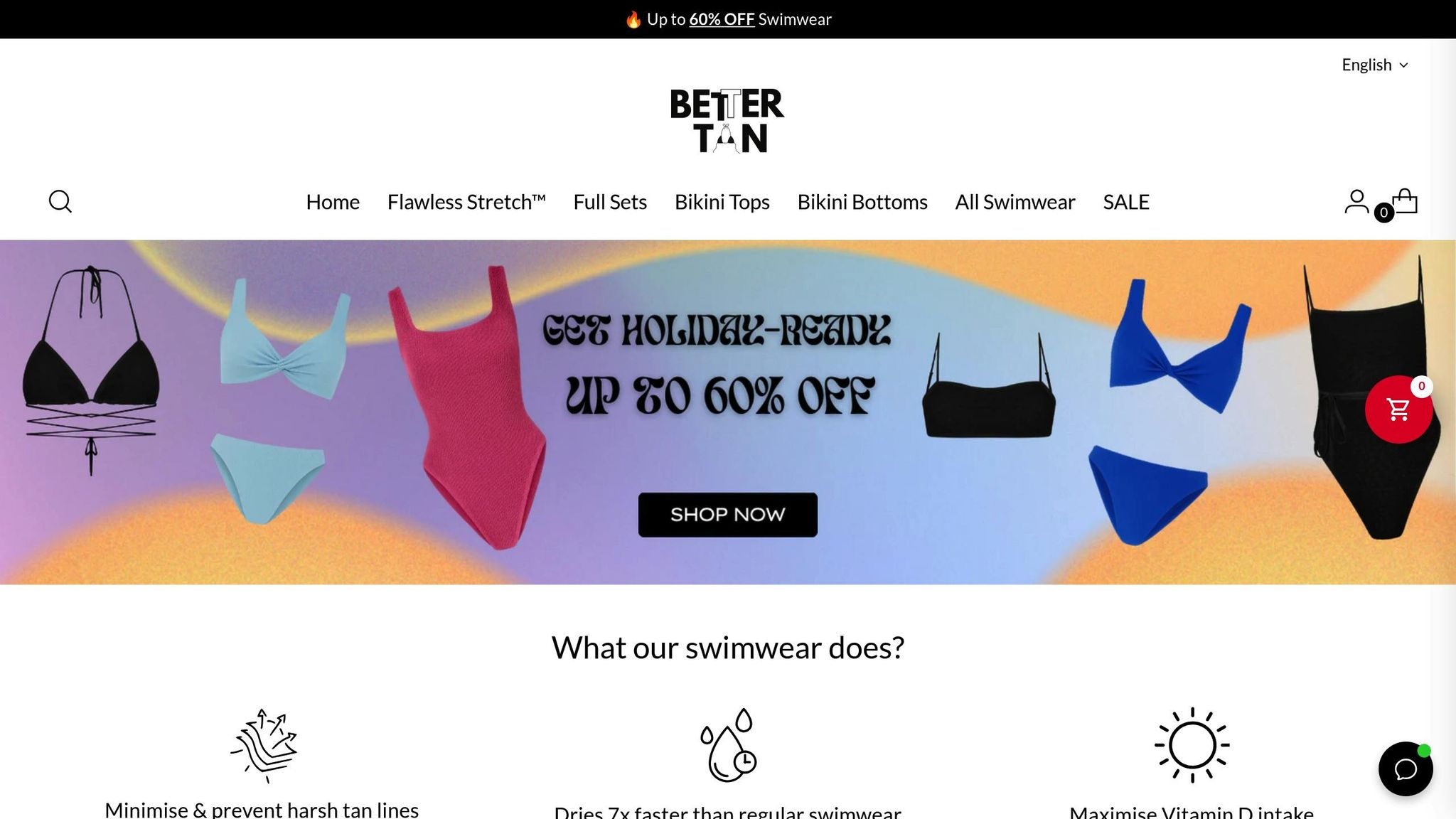
BetterTan swimwear goes beyond just offering a more even tan. Its MicroTan® fabric dries up to 7 times faster than regular swimwear, minimizing discomfort and reducing the risk of skin irritation from prolonged moisture.
The technology also supports Vitamin D production by allowing UVB rays to pass through - something traditional swimwear blocks entirely. This aligns with sun safety practices by providing controlled UV exposure without completely cutting off the benefits of sunlight.
Comfort and style are also key priorities for BetterTan. The fabric is soft, lightweight, and breathable, making it comfortable for both lounging in the sun and swimming. The collection includes a range of styles, from tops and bottoms to one-pieces, designed to flatter different body types.
In addition to its technical features, BetterTan emphasizes ethical manufacturing practices. The company works with factories that follow fair labor standards and environmentally conscious production methods, appealing to buyers who value responsible consumer choices.
BetterTan swimwear ranges in price from $50 to $120 USD per piece, with full sets (top and bottom) priced around $149.00. While these features enhance the tanning experience, using this swimwear safely is crucial.
How to Use Tan-Through Swimwear Safely
Even with its controlled UV exposure, tan-through swimwear doesn’t replace the need for sunscreen. Apply a broad-spectrum SPF 30 or higher to all exposed areas, as UV rays can still penetrate the fabric.
It’s also important to monitor your skin’s reaction during initial use. Those with fair skin (Fitzpatrick types I-II) or a history of skin cancer should consult a dermatologist before trying tan-through swimwear, as they are at higher risk for UV-related skin damage.
Timing is another key factor. Avoid peak sun hours between 10 a.m. and 4 p.m., and keep initial exposure sessions short to prevent overexposure. The UV protection offered by the fabric can vary depending on its color and fit - darker colors and tighter weaves typically block more UV rays.
Lastly, inspect your swimwear regularly. Check for signs of wear and tear, such as thinning or stretching, which could increase UV transmission beyond safe levels.
While users often report fewer tan lines and a more even tan with this swimwear, results can vary based on skin type, fabric color, and proper fit. Combining tan-through technology with consistent sun safety practices is essential for achieving the best results while protecting your skin.
Conclusion: Achieving a Safe and Healthy Tan
Understanding how UV rays interact with your skin is crucial. While both UVA and UVB rays are responsible for triggering melanin production (giving you that golden tan), they also cause DNA damage at the cellular level.
Skin cancer statistics are eye-opening: one in five Americans will develop skin cancer by age 70, and nearly 90% of nonmelanoma skin cancers are linked to UV exposure. These figures underscore the importance of balancing your desire for a tan with protective measures.
If you have fair skin, you’re at a higher risk of burning and skin damage due to lower melanin levels. However, even those with darker skin aren’t immune to the harmful effects of UV rays and should continue practicing sun safety.
For a safer tanning experience, focus on gradual sun exposure, use a broad-spectrum sunscreen with SPF 30 or higher, and avoid being outdoors during peak sun hours. It’s also worth noting that UV-induced DNA damage can continue for hours after leaving the sun, particularly in melanin-rich skin cells.
There are also modern solutions to complement traditional sun safety methods. For instance, BetterTan’s tan-through swimwear offers a clever way to tackle annoying tan lines. Their MicroTan® fabric allows controlled UV exposure, dries quickly, and even supports vitamin D production - all while keeping you comfortable.
Don’t forget the importance of regular skin checks. Monthly self-examinations and yearly dermatologist visits are vital, especially if you tan often or have a history of sunburns. Catching skin changes early can lead to much better treatment outcomes.
FAQs
What are the different types of UV rays, and how do they impact your skin?
UV rays, a form of ultraviolet radiation from the sun, are classified into two main types that impact your skin in different ways: UVA and UVB. UVA rays penetrate deep into the skin, leading to early signs of aging like wrinkles. On the other hand, UVB rays primarily affect the skin's surface, causing sunburn and playing a major role in tanning. Over time, exposure to both types can increase the risk of skin damage and even skin cancer.
Knowing how UV rays affect your skin can help you make smarter choices to protect it. Simple steps like applying sunscreen, avoiding the sun during peak hours, and wearing protective clothing can go a long way in reducing the risks. If you're aiming for a tan while trying to avoid tan lines and still get some Vitamin D, options like tan-through swimwear might be worth considering.
How does melanin protect the skin from UV rays, and why does its effectiveness differ across skin types?
Melanin serves as the skin's built-in shield against UV rays, working to absorb and scatter harmful radiation. This natural process helps lower the chances of DNA damage that can result from extended time in the sun. People with darker skin tones generally produce more melanin, offering them a higher level of protection. On the other hand, individuals with lighter skin tones have less melanin, making them more prone to UV damage and sunburn.
If you're aiming for a safe and even tan, tan-through swimwear can be a great option. It allows for more balanced sun exposure while reducing the appearance of tan lines. However, don't forget the basics of sun safety - limit your time in the sun during peak hours and apply sunscreen as needed to protect your skin.
How can I safely use tan-through swimwear to get an even tan while protecting my skin from UV damage?
BetterTan swimwear is made with MicroTan® fabric, designed to let sunlight pass through evenly. This helps you get a more natural tan while minimizing tan lines. However, tanning safely is key. Always use a broad-spectrum sunscreen to shield your skin from harmful UV rays, and stick to recommended sun exposure guidelines.
Take care of your skin by stepping out of direct sunlight during peak hours (10:00 AM to 4:00 PM), and drink plenty of water to stay hydrated while enjoying the sun.