

When it comes to protecting your skin from harmful UV rays, UV protective swimwear is a reliable solution. Unlike regular swimwear, which offers minimal protection (UPF 5 or less), UV protective options with a UPF 50+ rating block up to 98% of UVA and UVB rays - even when wet. Here's what you need to know to make an informed choice:
- UPF Rating: Look for swimwear rated UPF 50+ for maximum protection. UPF 30 is acceptable for lighter sun exposure.
- Fabric Type: Choose tightly woven synthetic fabrics like polyester for better UV blocking and durability.
- Fit and Coverage: Opt for snug but not overly tight fits to avoid stretching, which reduces UV protection. Full-coverage styles like rash guards or swim leggings provide better defense.
- Color: Dark or bright colors absorb UV rays more effectively than light shades.
- Certifications: Check for labels like UV STANDARD 801 or The Skin Cancer Foundation's Seal of Recommendation to confirm tested protection.
- Durability: Polyester-based fabrics resist chlorine better than nylon or spandex blends, ensuring long-lasting UV protection.
UV protective swimwear offers consistent coverage without the hassle of sunscreen reapplication. Prioritize high UPF ratings, quality fabrics, proper fit, and verified certifications to keep your skin safe in the sun.
How to Choose UV Protective Clothing | Lab Muffin Beauty Science
sbb-itb-d2baa00
UPF Ratings Explained
UPF Ratings Guide: UV Protection Levels in Swimwear
How UPF Ratings Work
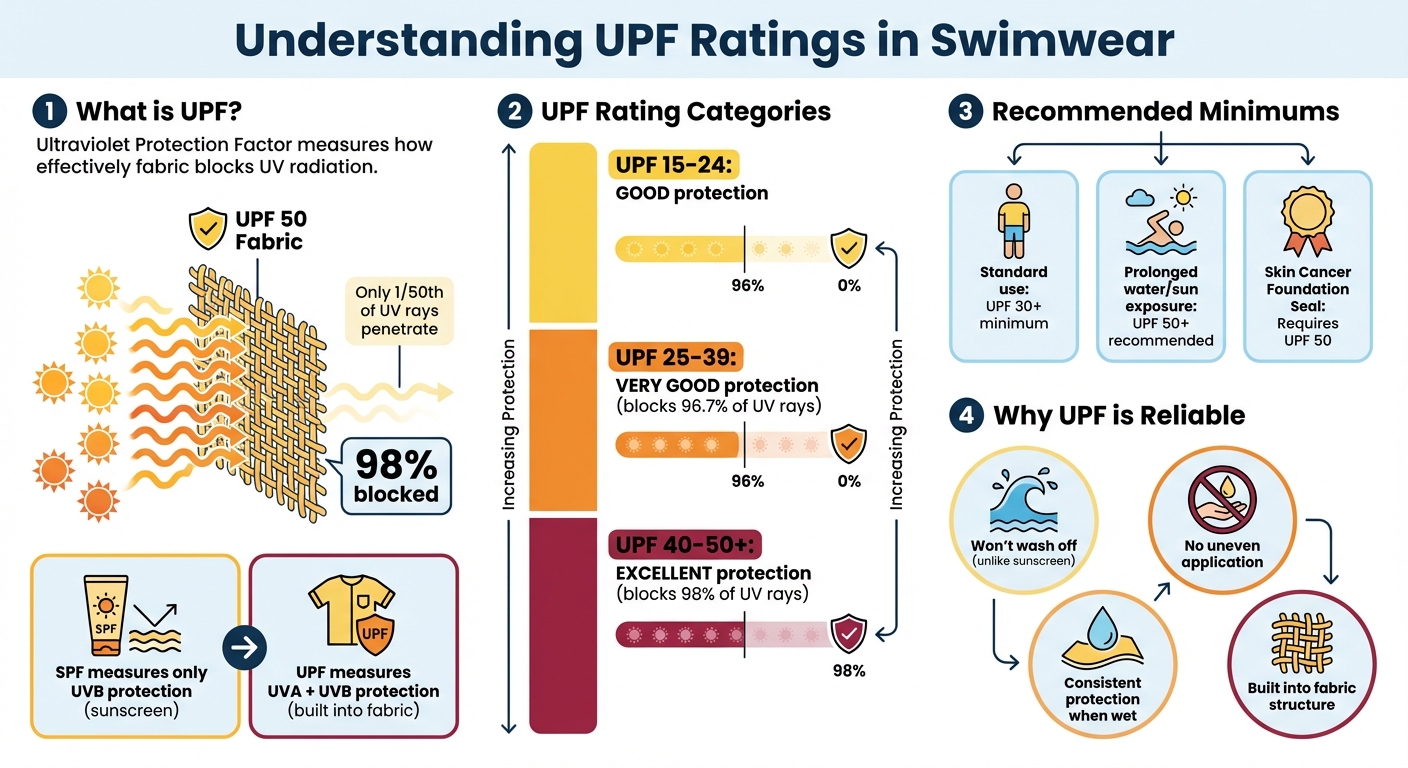
UPF, or Ultraviolet Protection Factor, measures how effectively a fabric blocks UV radiation from reaching your skin. For instance, a fabric with a UPF 50 rating allows only 1/50th of UV rays to penetrate, meaning it blocks about 98% of both UVA and UVB rays. UPF ratings are categorized as follows: 15–24 (Good), 25–39 (Very Good), and 40–50+ (Excellent). This system differs from SPF (Sun Protection Factor), which you see on sunscreen labels and only measures UVB protection. Unlike sunscreen, which can wash off or be applied unevenly, UPF protection is built into the fabric itself. This makes UPF a reliable choice for consistent UV protection, especially in swimwear.
Minimum UPF Levels to Look For
When choosing swimwear, aim for a UPF rating of at least 30, which blocks 96.7% of UV rays. The Skin Cancer Foundation classifies this as "very good" protection. For prolonged exposure to water or intense sunlight, opt for swimwear rated UPF 50+, which offers the highest level of protection.
"A fabric must have a UPF of 50 to qualify for The Skin Cancer Foundation's Seal of Recommendation".
To ensure you're getting genuine protection, check the garment's hangtag for a lab-tested UPF rating. This verification confirms the swimwear meets standardized protection levels and isn't just a marketing claim. Including UPF-rated swimwear in your outdoor wardrobe is a smart way to safeguard your skin.
What to Look for When Choosing UV Protective Swimwear
Fabric Type and Weave Density
When it comes to UV protection, the fabric you choose plays a huge role. Polyester naturally blocks UV rays with a base UPF (Ultraviolet Protection Factor) between 25 and 39. Nylon, a common swimwear material, starts with a much lower UPF of about 5. However, manufacturers can enhance its UV protection to UPF 50+ by using tightly woven fabrics and special chemical treatments.
The tightness of the fabric's weave is crucial. Tightly woven fabrics leave less space between the yarns, making it harder for UV rays to pass through. You can test this yourself with the “light test” - hold the fabric up to a light source. If light shines through, UV rays can too. Double-knit fabrics offer superior UV blocking compared to single-knit materials, and synthetic fibers outperform natural ones like cotton, hemp, or bamboo in this regard.
Stretching the fabric can also compromise its protection. For instance, dark biking shorts with a UPF of 85 can drop to just UPF 8 when fully stretched. To avoid this, look for swimwear blends that include 15–25% spandex or elastane. This balance helps maintain the fabric’s density and shape without over-stretching.
Once you've chosen a fabric with a high UPF rating, the next step is ensuring the swimwear fits well and provides adequate coverage.
Proper Fit and Coverage
Even with high-quality fabric, how the swimwear fits makes a big difference. Tight-fitting swimwear can stretch the material, creating gaps where UV rays can pass through at full intensity. To preserve the garment’s UV protection, opt for a fit that’s snug but not overly tight.
Coverage is key. Long-sleeved rash guards, swim leggings, and full-body suits offer the best defense by physically covering more skin. The more skin you shield with UPF-rated fabric, the less you'll need to depend on sunscreen, which is often applied unevenly or missed in certain spots. High-coverage swimwear is especially useful for prolonged water activities or situations with intense sun exposure.
Color Selection
The color of your swimwear also affects its UV protection. Dark and bright colors are more effective at absorbing UV rays than lighter shades, acting as a barrier to keep harmful rays from reaching your skin. Colors like black, navy blue, and deep red are excellent choices.
The level of color saturation matters too. A deeply saturated red, for example, protects better than a pale pink of the same shade. Bright colors are also a smart option - they can reflect UV rays and often contain UV-absorbing compounds in their dyes. Plus, vibrant colors make you more visible in the water, adding an extra layer of safety.
When selecting UV-protective swimwear, focus on the fabric's quality and weave, ensure a proper fit with ample coverage, and choose colors that enhance sun protection. By combining these elements, you can enjoy style and safety during your time in the sun.
Verifying Certifications and Testing
A high UPF rating doesn’t mean much without independent third-party verification. You can’t just rely on visual inspection to confirm UV protection or trust a manufacturer’s claims outright.
To ensure the swimwear provides genuine protection, look for recognized certification codes on the label. In the U.S., the standard testing protocols are ASTM D6603 and AATCC Test Method 183. Australia uses AS 4399:2020, while Europe follows EN 13758-1. These certifications confirm that the swimwear has undergone proper testing and meets minimum UV protection standards.
For swimwear, certifications that test fabric under realistic conditions are especially important. One of the most stringent is UV STANDARD 801, which evaluates materials when they’re wet, stretched, and aged - exactly how swimwear is used in real life. Unlike tests that only assess new, dry fabric, UV STANDARD 801 provides a more accurate measure of protection under real-world conditions.
Another helpful indicator is the Skin Cancer Foundation's Seal of Recommendation, which signifies fabrics with a UPF of 50+ that block at least 98% of UV rays. This seal offers a quick and reliable way to identify products that meet strict sun protection standards.
Be sure to check for official hangtags from trusted testing organizations like ARPANSA or UV STANDARD 801. These tags often include detailed protection levels for various skin types. For additional peace of mind, you can verify certifications online - UV STANDARD 801, for instance, offers a searchable database of certified products and manufacturers. Armed with these verifications, you can confidently choose swimwear that truly protects against harmful UV rays.
Additional Features for Better Sun Protection
Chlorine Resistance and Durability
Keeping swimwear in good condition is key to ensuring it continues to protect you from UV rays over time. Chlorine exposure can weaken fabric fibers, making them less effective at blocking harmful rays. As Bombshell Bay Swimwear explains:
"The extra negative side effect of chlorine is that it weakens the fabric's integrity. The fibres gradually become thinner... The threads eventually get weak and tiny enough to tear".
Polyester and PBT fabrics stand up to chlorine much better than nylon or spandex blends. In fact, swimsuits made from 100% polyester can last two to three times longer. This means they retain their UV protection even after many swims.
For dependable performance, aim for swimwear with at least 85% polyester or a mix of 90% polyester and 10% spandex. These combinations hold their shape and elasticity even after extended exposure to treated water, avoiding the "baggy and loose" fit that reduces UV coverage. Additionally, look for options that skip chemical treatments, offering safer and more reliable long-term protection.
Chemical-Free Fabric Options
Top-notch swimwear achieves its UPF rating through tightly woven fabrics and high fiber density, rather than relying on chemical coatings. This is especially beneficial for individuals with sensitive skin conditions like eczema or sun sensitivity.
"UPF protection won't wash out or fade. The high level of protection comes from the fabric's weave and construction, not a coating or treatment." - SwimZip
Chemical-free fabrics provide permanent UV protection that holds up through countless washes, unlike treated options where coatings can wear off over time. This is particularly important for infants and young children, whose skin is more delicate and permeable. These fabrics offer reliable sun defense without the risk of irritation. Many brands catering to sensitive skin also incorporate flat seams to reduce chafing during active play.
Your UV Swimwear Selection Checklist
Use this checklist to make sure your swimwear meets essential UV protection standards. For more details, refer to earlier sections on UPF ratings, fabric density, fit, and color.
UPF Rating:
Choose swimwear labeled UPF 50+ for the best protection against UV rays. If you're dealing with lighter sun exposure, UPF 30 can still provide adequate coverage.
Fabric Construction:
Check the fabric with a simple light test - if light passes through easily, it might not block UV rays effectively. Synthetic materials, like polyester, are a smart choice because they offer strong UV protection and resist chlorine damage .
Fit and Color:
Go for a snug fit to prevent overstretching, which can reduce UV protection. Opt for darker or vivid colors, as they absorb more UV rays. Also, look for garments with trusted third-party certifications, such as those from AATCC.
FAQs
How is UV protective swimwear different from regular swimwear?
UV protective swimwear is crafted using fabrics with a UPF (Ultraviolet Protection Factor) rating, which allows it to block up to 98% of harmful UV rays. This added layer of protection helps shield your skin from potential sun damage. Regular swimwear, on the other hand, typically lacks this feature, leaving your skin more vulnerable to the sun's rays.
When selecting UV protective swimwear, focus on key elements like tightly woven fabrics, a high UPF rating, and a design that fits comfortably while covering essential areas. These details provide effective sun protection without compromising on comfort.
How can I tell if my swimwear's UPF rating is authentic?
When shopping for swimwear with sun protection, make sure the UPF rating is certified by recognized testing organizations. Look for labels or tags that confirm compliance with established standards, such as those used in the U.S. or Australia.
Many well-known brands provide clear details about the UPF rating and certification on their products. If you're uncertain, check the product description online or contact the brand's customer service for more information.
Why is polyester a popular choice for UV-protective swimwear?
Polyester is a go-to fabric for UV-protective swimwear, thanks to its strong resistance to UV rays. This makes it an effective choice for guarding your skin against harmful sun exposure. Plus, it’s built to last - polyester handles chlorine, saltwater, and frequent use without breaking down, making it a reliable option for swimwear that stands the test of time.
Another perk? Polyester holds its shape and color beautifully. Even after countless sunny days at the beach or pool, your swimwear will stay comfortable and maintain its vibrant look.