

Cycling outdoors is a simple way to increase your Vitamin D levels. When your skin is exposed to sunlight, it absorbs UVB rays, triggering Vitamin D production. This nutrient is crucial for calcium absorption, muscle health, and immune function. Studies show that sunlight can provide over 80% of your daily Vitamin D needs, and regular cyclists are about 50% less likely to face Vitamin D deficiency compared to non-cyclists.
Here’s what you need to know:
- Best time for Vitamin D production: Ride between 10:00 AM and 3:00 PM when UVB rays are strongest.
- Exposure duration: Light-skinned individuals need 8–10 minutes of midday sun on 25% of their body in summer; darker skin tones may require longer.
- Winter challenges: In northern cities, UVB rays are often too weak for Vitamin D production, making short, frequent rides essential.
- Sun protection: Use SPF 30+ sunscreen and wear UV-protective clothing after initial sun exposure to prevent skin damage.
Cycling combines exercise, fresh air, and sunlight, making it a practical way to stay healthy. Just balance sun exposure with skin protection for the best results.
How Cycling Outdoors Increases Vitamin D
How Sunlight Creates Vitamin D in Your Skin
When you head out for a bike ride, ultraviolet B (UVB) rays - specifically those with wavelengths between 290–315 nm - interact with your skin. These rays are absorbed by a compound in your skin called 7-DHC, which is then converted into previtamin D3. Through a process called thermal isomerization, this previtamin D3 transforms into Vitamin D3. Interestingly, your skin has a built-in mechanism to regulate this process. Only about 15% of 7-DHC is converted at any given time, and any excess is broken down to prevent Vitamin D toxicity. This natural efficiency is why outdoor activities, like cycling, are so effective at promoting Vitamin D production.
Why Cycling Works Well for Sun Exposure
Cycling is a great way to soak up the sun and boost Vitamin D levels because it combines extended time outdoors with exposure of a large portion of your skin. While cycling, areas like your face, neck, arms, and legs - roughly 25–35% of your body - are typically exposed to sunlight. Even a ride of 30 minutes or more can provide sustained UVB exposure, especially during the peak hours of Vitamin D production. Research shows that during summer, just 13 minutes of midday sunlight on 35% of the skin, three times a week, is enough to maintain healthy Vitamin D levels in Caucasian adults.
Most cyclists tend to ride between 10:00 AM and 3:00 PM, which happens to be when UVB rays are at their strongest and Vitamin D production is at its peak. Dr. David J. Leffell, Chief of Dermatologic Surgery at Yale Medicine, explains the process:
"We each have vitamin D receptor cells that, through a chain of reactions starting with the conversion of cholesterol in the skin, produce vitamin D3 when they're exposed to ultraviolet B (UVB) from the sun." - Dr. David J. Leffell
To put it into perspective, 30 minutes of midday summer sun on 35% of exposed skin can generate 10,000–20,000 IU of Vitamin D. This natural production not only ensures higher circulation levels but also surpasses what most dietary sources can provide.
Why Is Vitamin D Crucial For Athletes & Can You Get It From Your Diet? | Vitamin D Explained
How to Maximize Vitamin D While Cycling
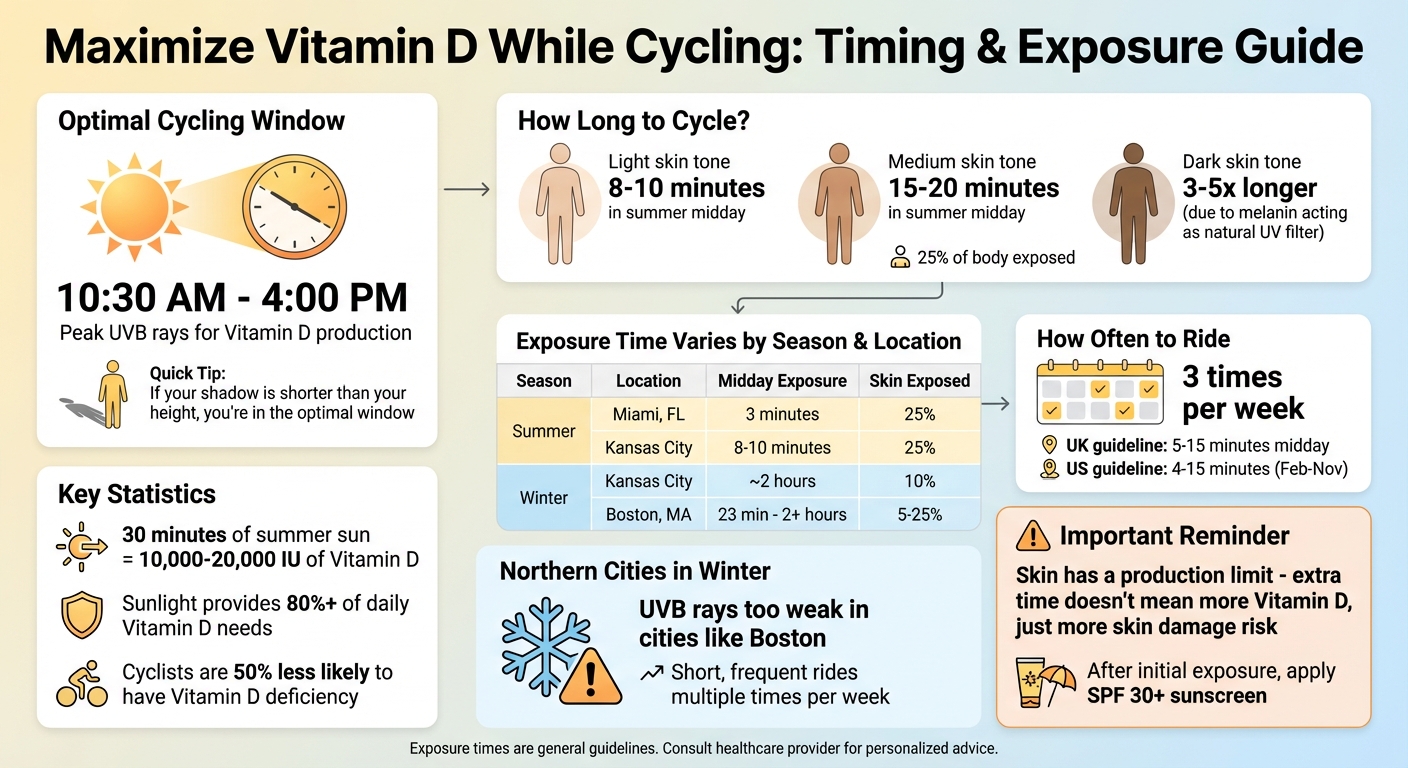
Optimal Cycling Times and Sun Exposure Duration for Vitamin D Production by Season and Location
Best Times of Day to Cycle for Vitamin D
To make the most of your Vitamin D production while cycling, aim to ride during solar noon when UVB rays are at their strongest.
"To get an optimal vitamin D supplement from the sun at a minimal risk of getting cutaneous malignant melanoma (CMM), the best time of sun exposure is noon." – PubMed
The ideal window for UVB exposure is between 10:30 a.m. and 4:00 p.m.. A quick way to check if you're in the prime time? Look at your shadow - if it's shorter than your height, you're good to go.
Now, let’s dive into how long and how often you should ride to maximize your Vitamin D without overexposing your skin.
How Long and How Often to Cycle
Spending more time in the sun doesn’t mean more Vitamin D. Once your skin reaches its production limit, any extra exposure just increases the risk of skin damage.
"The skin can produce only a limited amount of vitamin D at one time. When the body has reached this limit, spending more time in the sun will not continue to increase vitamin D levels." – National Center for Chronic Disease Prevention and Health Promotion
The time needed depends on your skin tone and location. Individuals with lighter skin only need a few minutes, while darker skin tones may require three to five times longer due to melanin acting as a natural UV filter. For example, if you have darker skin, plan for extended exposure to achieve the same Vitamin D benefits.
Winter presents its own challenges. In northern cities like Boston, the sun’s UVB rays are often too weak for effective Vitamin D production, even at noon. Instead, aim for short rides multiple times a week. Guidelines recommend midday sun exposure of 5 to 15 minutes, three times weekly in the UK, and 4 to 15 minutes in the US from February through November.
Seasonal changes significantly affect exposure needs. The table below provides some examples based on location and time of year:
| Season | Location Example | Midday Exposure Time | Skin Exposed |
|---|---|---|---|
| Summer | Miami, FL | 3 minutes | 25% |
| Summer | Kansas City | 8–10 minutes | 25% |
| Winter | Kansas City | ~2 hours | 10% |
| Winter | Boston, MA | 23 minutes to 2+ hours | 5–25% |
Lastly, the environment you cycle in plays a key role in how much sunlight your skin absorbs.
Where to Cycle for Maximum Sun Exposure
Choose routes with plenty of direct sunlight. Open roads or paths are ideal, while shaded forest trails or urban areas with tall buildings can block the UVB rays your skin needs. Riding near reflective surfaces, like water or snow, can amplify UV exposure by bouncing sunlight back onto your skin. Higher elevations also provide stronger UV intensity due to the thinner atmosphere.
Keep in mind that indoor cycling won’t help your Vitamin D levels because UVB rays can’t penetrate glass. To plan your ride, apps like "D Minder" can forecast UV levels in your area and suggest the best times for your skin type. And remember, if your skin feels hot, tender, or starts turning red, seek shade immediately - these are early signs of overexposure.
sbb-itb-d2baa00
Protecting Your Skin While Cycling in the Sun
Cycling is a great way to soak up some Vitamin D, but keeping your skin protected is essential for longer, safer rides. Striking the right balance between sun exposure and protection ensures you get the benefits of sunlight without the risks.
How to Use Sunscreen Correctly
Using broad-spectrum sunscreen is a must before heading out. Apply it 15 to 30 minutes before your ride, focusing on areas like your neck, ears, legs, and even your scalp, especially if your hair is thinning or helmet vents leave parts of your head exposed.
"Apply it 15 to 30 minutes before going outside. Spread it evenly over exposed areas, but don't rub it too aggressively. Let it dry fully before you get dressed or start sweating." – Professor Brian Diffey, British Association of Dermatologists
Choose a sunscreen with SPF 30 or higher. This level blocks about 97% of UVB rays while still allowing enough UV radiation to support Vitamin D production. During intense rides, reapply every hour; for less sweaty sessions, reapply every two hours.
Paul Melia from The Skin Cancer Foundation advises:
"Many long-distance cyclists know and practice the three r's of stopping every hour to rehydrate, refuel, and repeat... why not add another r when stopping each hour and reapply that sunscreen?"
Of course, sunscreen is just one part of the equation - your clothing can also make a big difference in keeping your skin safe.
Clothing Options for Sun Protection and Vitamin D
High-UPF clothing is an excellent choice for shielding your skin while still letting in some UVB rays. For example, garments with a UPF rating of 50 block all but 1/50th of UV radiation, offering reliable protection that won’t wear off like sunscreen. This is especially important for areas like the back of your neck and ears, which are heavily exposed during cycling.
For those who want to maximize Vitamin D production while staying protected, tan-through fabrics are a smart option. Fabrics like BetterTan’s MicroTan® allow UV rays to pass through in a controlled way, helping minimize tan lines while still offering coverage. This lets you expose areas like your arms or legs to beneficial UVB rays without sacrificing safety. Don’t forget to wear a cycling cap or bandana under your helmet for extra scalp protection.
Cycling Gear for Better Sun Exposure
Lightweight and Breathable Clothing
What you wear while cycling can play a big role in how much Vitamin D your body produces. Fabrics that are loosely woven or made from thin mesh materials allow more UV rays to reach your skin compared to tightly woven synthetics like polyester or Lycra. A simple test? Hold your jersey up to the light - if you can see light passing through easily, it’s likely letting in UV rays as well.
Color matters too. Lighter shades like white, pale pink, or light blue allow more UV rays to penetrate, aiding in Vitamin D production. On the other hand, darker colors like black or navy block more sunlight. Tight-fitting clothes can also increase UV exposure. For maximum sun exposure, consider sleeveless jerseys, short-sleeved tops, or shorts to expose more skin to sunlight.
Specialized fabrics, such as BetterTan's MicroTan®, are designed to balance UV exposure while still offering coverage. Cotton, while more UV-permeable than synthetics, generally has lower moisture-wicking abilities, which might make it less ideal for long rides.
Beyond clothing, the right accessories can help you strike the perfect balance between sun exposure and protection.
Accessories for Comfort and Protection
UV-protective sunglasses are a must-have for shielding your eyes from harmful rays and reducing glare during extended rides. Did you know the backs of your hands receive about 71% of the UV dose that hits the top of your head - approximately 1.28 minimal erythemal dose (MED)? UV-protective gloves are an excellent way to prevent skin damage in this often-overlooked area.
Helmets with visors are another smart choice, as they help shade your face from direct sunlight. Since the top of your head gets the most UV exposure - about 1.80 MED daily - wearing a thin cycling cap or bandana under your helmet adds an extra layer of protection, especially if you have thinning hair or a helmet with larger vents.
For targeted sun protection, arm and leg sleeves with UPF ratings are a versatile option. They can be removed during your ride to adjust your sun exposure as needed. Plus, fluorescent sleeves not only protect your skin but also make you more visible to drivers, enhancing safety on the road.
Conclusion
Cycling outdoors does more than just keep you fit - it’s a natural way to boost your Vitamin D levels. Studies reveal that cyclists are about 50% less likely to experience Vitamin D deficiency compared to non-cyclists. Beyond that, regular cycling strengthens bones, builds muscle, enhances immune function, and improves overall athletic performance.
To make the most of these benefits, it’s important to balance sun exposure with protection. Aim for 5–30 minutes of direct sunlight between 10:00 a.m. and 4:00 p.m., a few times a week, to help your body produce Vitamin D. For longer rides, remember to use broad-spectrum sunscreen and wear protective clothing to shield your skin.
Choosing the right gear can also make a difference. Lightweight, UV-permeable options - like BetterTan’s tan-through swimwear - offer a smart solution. This gear not only allows controlled UV exposure but also dries up to seven times faster than standard swimwear, keeping you comfortable and reducing tan lines.
Cycling offers the perfect combination of fresh air, exercise, and sunshine. Just don’t forget to protect your skin after those initial sun-filled minutes, stay hydrated, and consider checking your Vitamin D levels if you’re training intensively or living in less sunny regions.
Ride often and let the sun fuel your health.
FAQs
How does cycling help increase Vitamin D levels compared to other outdoor activities?
Cycling is a fantastic way to naturally boost your vitamin D levels. It combines prolonged outdoor activity with a posture that exposes more skin to sunlight, allowing your body to absorb UV-B rays essential for vitamin D production. As you ride, areas like your face, neck, forearms, and lower legs are typically exposed to direct sunlight. Plus, the forward motion of cycling reduces shading, unlike activities like gardening or walking, where clothing or stationary positions might block sunlight.
For the best results, try to get 10–15 minutes of sun exposure during peak hours (10 a.m.–2 p.m.) on clear days. Afterward, protect your skin by applying a broad-spectrum sunscreen (SPF 15 or higher) and wearing lightweight clothing that leaves key areas uncovered. If you’re cycling near water, consider tan-through swimwear, such as those made with BetterTan’s MicroTan® fabric. This unique material enhances vitamin D absorption while keeping you comfortable and minimizing tan lines. For longer rides, take breaks in shaded areas and use sunglasses or a hat to shield your eyes while still soaking in the sun’s benefits.
What can I do to maintain healthy Vitamin D levels during winter if there’s little sunlight?
If you live in a place where winter brings limited sunlight, there are ways to maintain your Vitamin D levels. Taking a Vitamin D supplement is a simple option, or you can add fortified foods like milk, orange juice, and cereals to your meals. When sunny days do come around, try to spend a little time outdoors around midday to soak up some UVB rays.
To get the most out of your time in the sun, wear minimal clothing or consider tan-through swimwear, which allows more skin exposure while keeping tan lines in check. Just make sure to balance this with proper skin protection to avoid overexposure or sunburns.
How can I safely get Vitamin D from the sun while cycling?
Enjoying a sunny bike ride can be a great way to boost your Vitamin D levels, but it's equally important to keep your skin protected. To strike the right balance, try cycling in the early morning or late afternoon when UV rays are less intense. A brief 10–15 minutes of sunlight exposure on small areas like your face or forearms is often enough to help your body produce Vitamin D without risking too much skin damage.
For added protection, use a broad-spectrum sunscreen with SPF 30 or higher on exposed areas, and make sure to reapply every two hours. Lightweight, breathable fabrics can also shield your skin while allowing for comfort during your ride. If you're looking for something different, BetterTan’s tan-through swimwear offers a clever way to let UV rays through for tanning while still providing some coverage. Don’t forget to stay hydrated, and if your skin starts feeling irritated, take a break in the shade to cool off.